
UI vs UX: What Business Owners Need to Know
When planning a website or mobile app, many business owners hear the terms UI and UX used interchangeably. While they are closely connected, they are not the same. Understanding the difference between UI vs UX is essential if you want to create digital experiences that attract visitors, keep them engaged, and convert them into customers.
A visually appealing website may grab attention, but if users struggle to navigate it, they’ll likely leave. Similarly, a highly functional website with poor visuals may fail to create a strong first impression. Both UI design and UX design play a crucial role in creating successful digital products.
Let’s explore what UI and UX really mean, how they differ, and why every business owner should understand them.
Understanding the Difference Between UI and UX Design
Although UI and UX work together, they focus on different aspects of a digital product.
What Is UI Design?
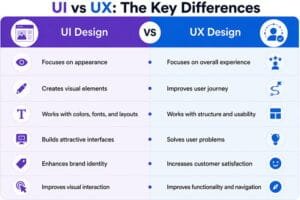
UI (User Interface) design focuses on the visual elements users interact with.
It includes everything users can see and click, such as:
- Buttons
- Icons
- Typography
- Colors
- Images
- Navigation menus
- Layouts
- Forms
The goal of UI design is to create an interface that is visually appealing, consistent, and easy to use.
Good UI makes your website or app look professional while reinforcing your brand identity.
What Is UX Design?
UX (User Experience) design focuses on how users feel while interacting with your website or application.
Rather than appearance alone, UX considers the entire user journey.
It includes:
- Website usability
- Navigation flow
- Information architecture
- User behavior
- Accessibility
- Loading speed
- Ease of completing tasks
The objective of UX design is to make every interaction simple, efficient, and enjoyable.
A strong user experience helps visitors accomplish their goals with minimal effort.
Think of it this way.
UX determines how a website works.
UI determines how it looks.
Both are equally important for creating a successful digital experience.
Why UI and UX Matter for Business Owners
Your website is often the first interaction customers have with your business.
A poor experience can lead to:
- High bounce rates
- Lost sales
- Low engagement
- Negative brand perception
On the other hand, investing in both user interface and user experience offers several business benefits.
Better Customer Experience
Customers expect websites to be easy to navigate and visually appealing.
A combination of strong UI and UX creates a smooth customer experience, encouraging visitors to stay longer and interact with your business.
Higher Conversion Rates
When users can easily find information, navigate pages, and complete actions, they’re more likely to:
- Submit inquiries
- Make purchases
- Book appointments
- Contact your business
Improved usability often leads to higher conversions.
Stronger Brand Credibility
A professionally designed website builds trust.
Consistent visual design combined with intuitive navigation creates a positive impression and strengthens your brand’s credibility.
Better Mobile Experience
Today’s users browse websites on multiple devices.
Responsive mobile app design and responsive design ensure your website performs well on desktops, tablets, and smartphones.
A seamless experience across devices improves customer satisfaction and search engine performance.
The UX Design Process
Creating a great user experience involves more than simply designing pages.
UX designers typically follow a structured process that includes:
UX Research
Understanding user needs is the foundation of successful design.
UX research helps identify:
- Customer expectations
- Pain points
- User behavior
- Business goals
These insights guide every design decision.
Wireframing
Before creating the final design, designers develop wireframing layouts.
Wireframes act as blueprints that define:
- Content placement
- Navigation
- Page structure
- User flow
They help teams focus on functionality before visual design begins.
Prototyping
Once wireframes are approved, designers create prototyping models.
Interactive prototypes allow businesses to preview how users will navigate the website before development starts.
This reduces costly revisions later in the project.
Usability Testing
Even the best designs should be tested.
Usability testing helps identify navigation issues, confusing layouts, and areas where users struggle.
Testing ensures the final product delivers a smooth and user-friendly experience.
The Role of UI Design
While UX defines the experience, UI brings the design to life.
Effective UI includes:
- Consistent branding
- Easy-to-read typography
- Clear buttons
- Attractive layouts
- Balanced color schemes
- High-quality visuals
Strong visual design encourages users to engage with your website while supporting a professional brand image.
Why Businesses Need Both UI and UX
Some businesses focus only on appearance.
Others prioritize functionality while overlooking design.
The most successful websites combine both.
For example:
A beautifully designed website with poor navigation frustrates users.
A functional website with outdated visuals may fail to build trust.
Combining interaction design, usability, and attractive visuals creates digital experiences that users enjoy and remember.
Businesses that invest in both UI and UX often experience:
- Better customer retention
- Higher engagement
- Increased conversions
- Improved customer satisfaction
- Stronger brand reputation
Final Thoughts
Understanding UI vs UX is essential for building websites and digital products that not only look impressive but also perform effectively.
UI design focuses on creating visually appealing interfaces that reflect your brand, while UX design ensures users can navigate your website easily and accomplish their goals without frustration.
When combined, they improve website usability, strengthen the customer experience, and contribute directly to business growth.
Whether you’re launching a new website, redesigning an existing one, or developing a mobile application, investing in both UI and UX is one of the smartest decisions you can make for your business.
Reach Us for Website Design and Development Services
Looking to create a website that is both visually appealing and user-friendly?
At Branduo Studio, we design and develop websites that combine exceptional UI with intuitive UX to deliver outstanding digital experiences. From user research and wireframing to responsive website development and conversion-focused design, our team creates websites that not only represent your brand but also help achieve your business goals.
Whether you need a business website, landing page, or complete digital product design, Branduo Studio is here to help you build a website that engages users, strengthens your brand, and drives measurable results.