


Branding vs Marketing: What’s the Difference and Which Comes First?
Businesses often use branding and marketing interchangeably, but they serve different purposes. While marketing helps businesses reach potential customers and generate sales, branding shapes how people recognise, understand, and connect with a business.
Understanding the branding vs marketing difference is important for building a strong market presence. Both contribute to business growth, but they work differently. A clear brand foundation helps marketing campaigns communicate a consistent message and create meaningful customer relationships.
In this guide, we explore what branding and marketing mean, how they differ, and which one businesses should prioritise first.
What Is Branding and What Is Marketing? A Simple Definition
Branding and marketing are connected, but their objectives are different.
Branding is the process of defining a business’s identity, values, personality, and position in the market. It determines how customers recognise and perceive a business. Elements such as logos, colours, typography, tone of voice, and communication style contribute to a consistent brand identity.
Marketing, on the other hand, involves promoting products or services to reach potential customers and encourage action. It includes activities such as social media marketing, advertising, SEO, email campaigns, and content marketing.
In simple terms, branding defines who you are, while marketing communicates what you offer and why customers should choose you.
1. Branding vs Marketing: Understanding the Key Differences
Although both contribute to business success, their focus, objectives, and timelines vary.
Here are some important differences:
- Purpose: Branding builds recognition and trust, while marketing promotes products and services to generate interest and sales.
- Timeframe: Branding focuses on long-term growth, whereas marketing campaigns often target short-term results.
- Consistency: Branding maintains a consistent identity, while marketing strategies adapt to audience behaviour, trends, and business objectives.
- Customer connection: Branding builds emotional connections and familiarity, while marketing encourages customers to take specific actions.
- Measurement: Branding can be evaluated through recognition, reputation, and customer perception. Marketing performance is measured through leads, conversions, engagement, and sales.
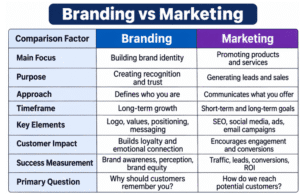
Both are necessary. A business needs a recognisable identity as well as effective promotional activities to attract and retain customers.
2. Why Brand Strategy Should Come Before Marketing
Before investing in advertisements or promotional campaigns, businesses need clarity about what they represent.
A well-defined brand strategy establishes the foundation for all communication and marketing decisions. It helps businesses identify their purpose, values, positioning, and audience.
Without this foundation, marketing messages can become inconsistent across platforms. One campaign may communicate a premium image, while another may focus entirely on affordability.
A clear brand strategy helps maintain consistency in:
- Visual identity and communication.
- Brand personality and tone of voice.
- Customer expectations and experience.
- Market positioning and differentiation.
- Long-term business objectives.
When customers understand what a brand stands for, marketing becomes more focused and effective.
3. How Branding Builds Recognition and Customer Loyalty
Branding goes beyond creating an attractive logo or choosing the right colours. It shapes the overall experience customers associate with a business.
A strong brand identity helps people recognise a business across different platforms. Consistent messaging, visuals, and customer experiences gradually build familiarity.
Three important elements contribute to this process:
Brand Awareness: Helps customers recognise and remember your business when they come across its products or services.
Brand Positioning: Establishes how your business stands apart from competitors and what makes your offering relevant to customers.
Brand Equity: Represents the value a brand builds through recognition, trust, reputation, and customer relationships.
Together, these elements influence customer perception and encourage repeat purchases. When customers consistently receive the experience they expect, they are more likely to develop trust and long-term loyalty.
4. How Marketing Turns Brand Identity into Business Growth
Once the brand foundation is established, marketing helps communicate it to the right people.
A well-planned marketing strategy identifies the channels, messages, and activities required to reach a defined target audience.
Businesses can use different marketing approaches depending on their objectives:
- Social Media Marketing: Builds visibility and encourages audience engagement.
- Content Marketing: Shares useful information to educate potential customers.
- Search Engine Optimisation: Improves website visibility and attracts relevant organic traffic.
- Paid Advertising: Reaches specific audiences and supports faster lead generation.
- Email Marketing: Maintains communication with existing and potential customers.
These activities support lead generation, improve brand awareness, and move potential customers towards purchasing decisions.
Marketing campaigns become more effective when every message reflects the brand’s established identity and values.
5. Branding and Marketing: How They Work Together
Branding and marketing should not operate as separate activities. They complement each other at different stages of the customer journey.
Consider a business launching a new product.
Branding establishes the product’s identity, target audience, positioning, visual language, and messaging. Marketing then uses social media, advertisements, website content, and promotional campaigns to introduce it to potential customers.
The marketing funnel also demonstrates how both contribute to customer relationships:
- Awareness: Marketing introduces the brand to new audiences.
- Consideration: Branding builds recognition and trust through consistent communication.
- Conversion: Marketing encourages enquiries and purchases.
- Retention: Branding strengthens customer relationships and encourages loyalty.
This combination helps businesses achieve immediate marketing objectives while building long-term brand value.
6. Common Mistakes Businesses Make When Choosing Between Branding and Marketing
Businesses sometimes invest heavily in marketing without establishing a clear brand foundation. Others focus entirely on branding without actively promoting their products or services.
Here are some common mistakes to avoid:
- Investing in advertisements without defining brand positioning.
- Changing visual identity and messaging across platforms.
- Focusing only on short-term sales targets.
- Ignoring customer feedback and perception.
- Running marketing campaigns without understanding the target audience.
- Treating branding as a one-time logo design exercise.
Avoiding these mistakes helps businesses maintain consistency and create a stronger market presence.
Contact Us for Branding Services in Pune
A successful business needs more than promotional campaigns. It needs a clear identity, a defined market position, and consistent communication that customers can recognise and trust.
At Branduo Studio, we help businesses build distinctive brand identities through strategic thinking and creative execution. From brand positioning and visual identity to complete brand strategy, we create branding solutions that give businesses a clear direction.
Looking to establish or strengthen your brand? Connect with Branduo Studio for Branding Services in Pune and build an identity that reflects your business vision.
FAQs
1. What is the main difference between branding and marketing?
Branding defines a business’s identity and how customers perceive it. Marketing focuses on promoting its products or services to attract customers and generate sales.
2. Which comes first, branding or marketing?
Branding should generally come first because it establishes the identity, positioning, and messaging that guide marketing activities.
3. Can a business succeed with marketing but no branding?
Marketing can generate short-term sales without strong branding. However, building recognition, trust, and customer loyalty becomes more challenging without a consistent brand identity.
4. What are the main elements of a brand strategy?
A brand strategy includes brand purpose, values, positioning, personality, target audience, messaging, and visual identity.
5. How does branding improve marketing performance?
Strong branding creates familiarity and trust. This helps marketing campaigns communicate more effectively and makes businesses easier for customers to recognise and remember.
6. Are branding and marketing ongoing processes?
Yes. Branding evolves as businesses grow and markets change, while marketing requires continuous planning, execution, and performance evaluation.
Final Thoughts
Branding and marketing serve different purposes, but neither works as effectively without the other. Branding creates the foundation for recognition, trust, and customer relationships, while marketing brings that identity to the right audience.
For businesses focused on long-term vs short-term growth, investing in both is essential. Start with a clear brand identity, build a consistent strategy, and use marketing to communicate your value. Together, they create a stronger and more sustainable business presence.